

Grand Canyon Rim-to-Rim Hike — Training & Packing Guide
April 16, 2026

The wind hits you first.
Not gently, either. It pushes against your chest as you step onto the trail, like Patagonia itself is sizing you up. You take a breath, adjust your pack, and look ahead. Jagged peaks cut into the sky, glaciers glow in impossible shades of blue, and somewhere in the distance, someone from your group lets out a quiet “wow.”
That is your starting line.
This is not just another hiking trip. This is Patagonia. And if you are even thinking about Patagonia 2027, you are already closer than you think to something unforgettable.
Because out here, every step asks a little more from you. And gives a lot more back.

Patagonia does not try to impress you. It just is.
Raw, wild, and completely unapologetic about it. One minute you are walking beside a calm glacial lake that looks almost too perfect to be real. The next, the wind picks up, clouds roll in, and the entire landscape shifts around you.
That unpredictability is part of what makes this such an incredible destination for adventure travel. You are not just observing nature. You are in it.
And when you experience it through small group travel, something changes. You are not navigating it alone. You are sharing every climb, every laugh, every “did you just see that?” moment with people who are right there with you.
That is what turns a hiking trip into something much bigger.
Timing your trip matters more here than in most places. Patagonia’s seasons shape everything, from the trails to the energy of the experience.
If you are planning ahead for Patagonia 2027, here is how it really breaks down.
This is peak trekking season, and for good reason. The weather is at its most stable, the days are long, and the trails are fully accessible. You are more likely to get the classic Patagonia experience with clear views of iconic peaks like Mount Fitz Roy and Cerro Torre.
This is also when the energy is highest. More trekkers, more movement, more shared excitement. If you want that full adventure atmosphere, this is your window.
Things quiet down. The crowds thin out, and the landscape shifts into deep reds, oranges, and golds. The air feels cooler, and the pace naturally slows.
If you are someone who prefers a more reflective experience, this is an incredible time to go. It feels a little more personal.
Winter in Patagonia is not for traditional trekking, but it has its own kind of magic. Snow covered peaks, frozen landscapes, and a much quieter environment.
It is less about hiking and more about experiencing the region in a different way.
Spring feels like Patagonia waking up. Wildlife becomes more active, flowers begin to bloom, and the trails start opening again.
It is a great balance between fewer crowds and improving conditions.
If you are looking at Patagonia 2027, February sits right in that sweet spot where conditions, accessibility, and overall experience come together in the best possible way.

You can read about Patagonia all day, but it is hard to understand it until you are out there.
The terrain is varied and constantly changing. One hour you are hiking through open valleys with wide views in every direction. The next, you are climbing rocky paths with the wind pushing against you. Then suddenly, the trail opens up to a glacier that looks like it belongs on another planet.
It is not easy. There are climbs that make you question your pacing. There are moments where the weather shifts and you have to adjust. But that is exactly what makes it so rewarding.
You are not just walking. You are earning every view.
And at the end of the day, when you take your boots off and sit down with the group, that feeling hits you. Tired, yes. But in the best possible way.
There was a morning on one of our guided trips where everything felt stacked against us. Strong winds, low clouds, and a steady climb ahead toward Mount Fitz Roy and Lago de Los Tres.
No one said much at first. You could feel it. Everyone was focused, just putting one foot in front of the other. The climb is legit.
And then, almost without warning, the clouds started to lift.
The peaks came into view slowly, like they were revealing themselves on purpose. The entire group stopped. No one needed to say anything. It was one of those moments where everything just lands. We reached the lake and marveled at the majesty, catching our breath from the climb, yes, but also from the scenery around us.
That is Patagonia.
It makes you work for it. But when it gives you something, it feels earned.
You could try to piece together a Patagonia trip on your own, but it is not the same as experiencing it with a team that knows how to bring it to life.
With Fit 4 Adventure the difference is not just logistics. It is the feeling of being supported while still being challenged.
You are free to focus on the experience instead of worrying about the details. The guides know when to push the pace and when to slow things down. The group becomes part of the journey, not just people you happen to be traveling with.
If you are considering Patagonia 2027, you can explore the full trip here: https://www.fit4adventure.com/explore-trips/patagonia-2027
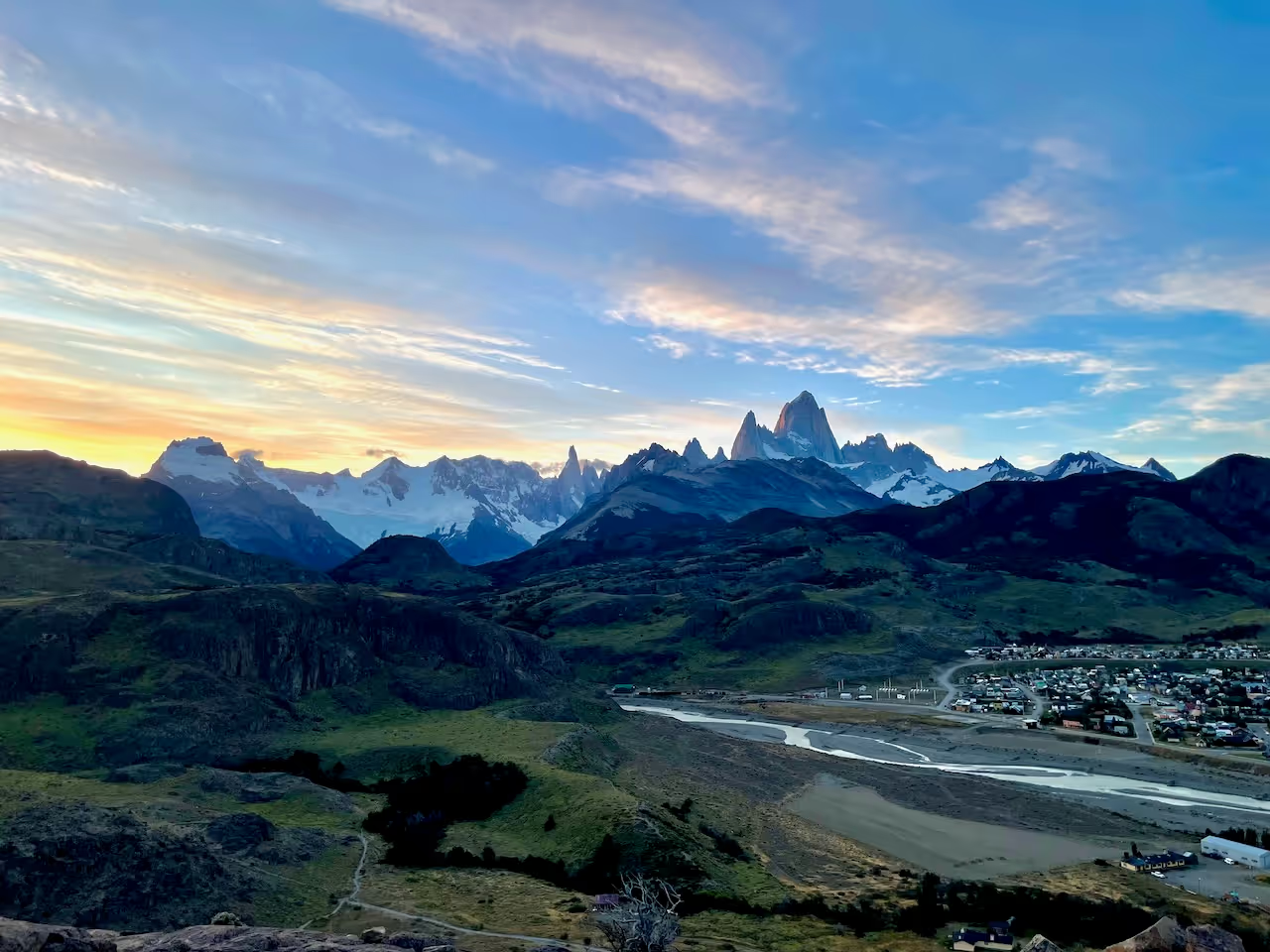
Patagonia rewards preparation. The weather can shift quickly, and being ready for that makes a huge difference in how much you enjoy the experience.
Let me ask you something.
Do you want a trip where you are comfortable the whole time, or one where you come back with stories you cannot stop telling?
Because Patagonia leans toward the second.
It asks for effort. It pushes you a little. But it also gives you those moments where everything feels bigger than you expected.
If that sounds like your kind of experience, you are probably already halfway there.

You do not need to be elite, but you should be prepared for sustained hiking days. The goal is to challenge yourself in a way that feels achievable.
It will. That is part of Patagonia. The key is flexibility, and guided trips are designed to adapt so you still get an incredible experience.
You get structure, support, local expertise, and a shared group experience that is hard to replicate on your own.
At some point, this stops being something you read about and starts becoming something you do.
Patagonia is not just a destination you visit. It is something you experience fully- physically, mentally., emotionally.
The trails, the wind, the views, the people you meet along the way. It all adds up to something that stays with you long after you leave.
If Patagonia 2027 is on your mind, do not let it stay there.
Take a look at the trip and see if it feels like the right next step for you: https://www.fit4adventure.com/explore-trips/patagonia-2027
Because it will challenge you. It will change you.
And it will absolutely be worth it.

.avif)


