Grand Canyon Rim-to-Rim Hike — Training & Packing Guide
April 16, 2026

Let's start with the basics — because we get this question more than you'd think.
A trekking pole is a lightweight, handheld pole designed to help you hike more comfortably and safely. Think of it as adding two extra legs to your body. Instead of your knees, hips, and ankles absorbing 100% of every step, trekking poles distribute that impact across four points of contact. Less strain on your lower body, more stability on sketchy terrain, and a whole lot less hobbling around the day after a big hike.
Most trekking poles are made from aluminum or carbon fiber, weigh somewhere between 8–20 ounces per pole, and feature adjustable lengths, ergonomic grips, and wrist straps. They collapse or fold down for storage and travel.
You might hear them called hiking poles, walking poles, hiking sticks, or trekking staffs. They're all the same thing. (More on that in a second.)
Not to be confused with: a random stick you picked up off the trail. That's just a stick. We love the energy, but it's not the same thing.
Short answer: no.
"Trekking poles" and "hiking sticks" are interchangeable terms for the same piece of gear — a manufactured pole with a grip, wrist strap, and tip designed for trail use. Some people say "hiking staff" when they mean a single pole rather than a pair, but even that distinction is pretty loose.
The only real difference? Marketing. Some brands lean into "trekking pole" for the mountaineering crowd and "hiking stick" for the casual day-hiker audience. Functionally, identical.
So when we say "trekking poles" throughout this guide, know that we're also talking about hiking sticks, hiking staffs, walking poles, and whatever else the gear industry decides to call them next week.
(Again — a branch from the woods does NOT count. Sorry.)
We often list "Trekking Poles" on our Packed 4 Adventure gear lists, and just as often get asked the question: "Do I really NEED trekking poles?"
In an effort to address this age-old question, I figured I'd write a thorough guide about it. Honestly — who DOESN'T want to read about trekking poles?!? (Hands DOWN, team... 😆)
Speaking of honesty — I'll be honest, my first run-in with trekking poles was not a positive one. I was hiking the Inca Trail, hustling to see sunrise over Machu Picchu when I came up behind a group of hikers. Clickety-clack. Clickety-clack. They were moving slow, the trail was narrow, and I couldn't pass due to their poles. I was young, brash back then — which meant I was also annoyed and impatient, frustration growing with every stride. Thankfully they stopped to rest, allowing me to hurry past (and catch that sunrise).
"Trekking poles. Pfffft." I vowed I would never use them.
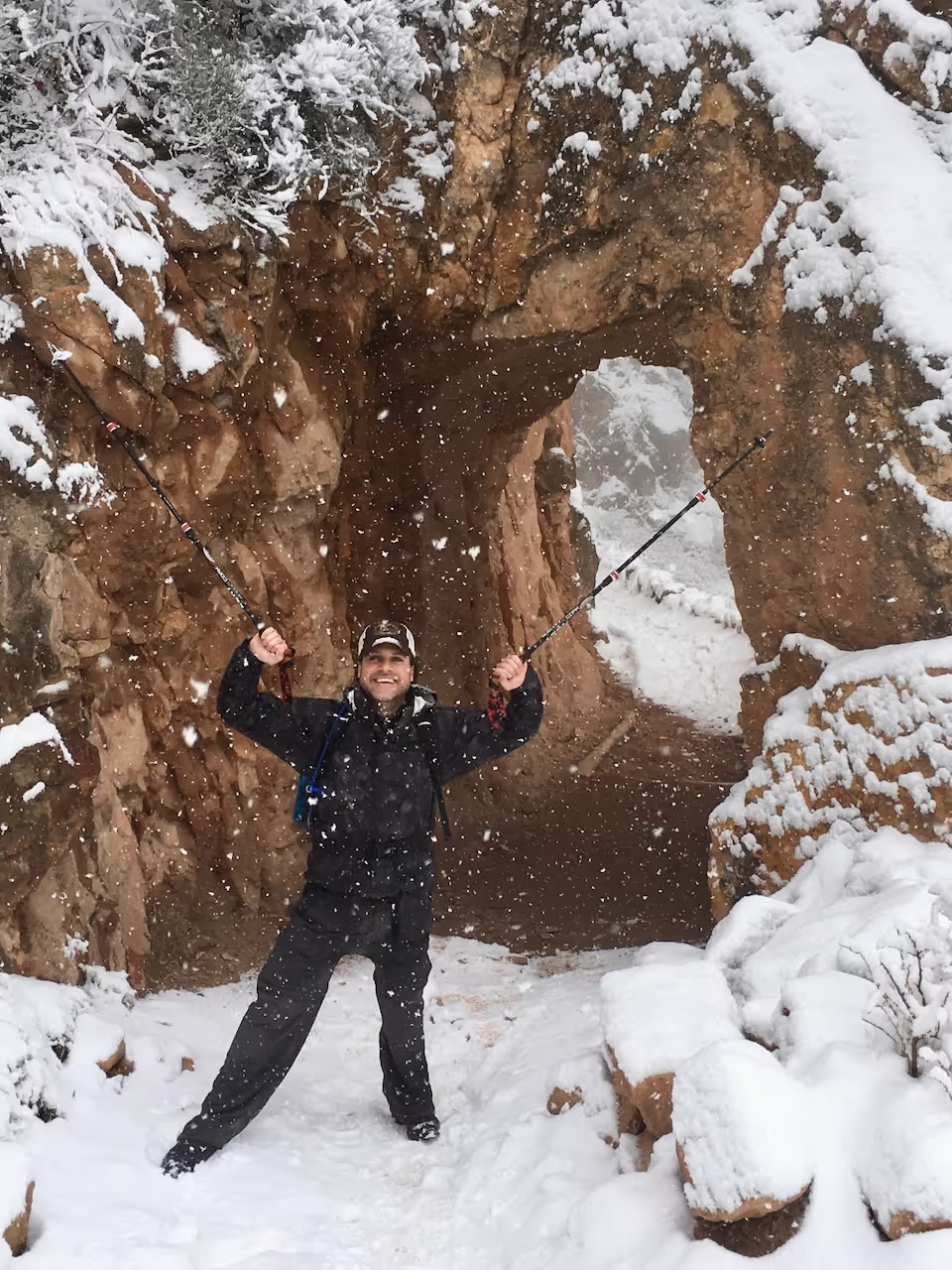
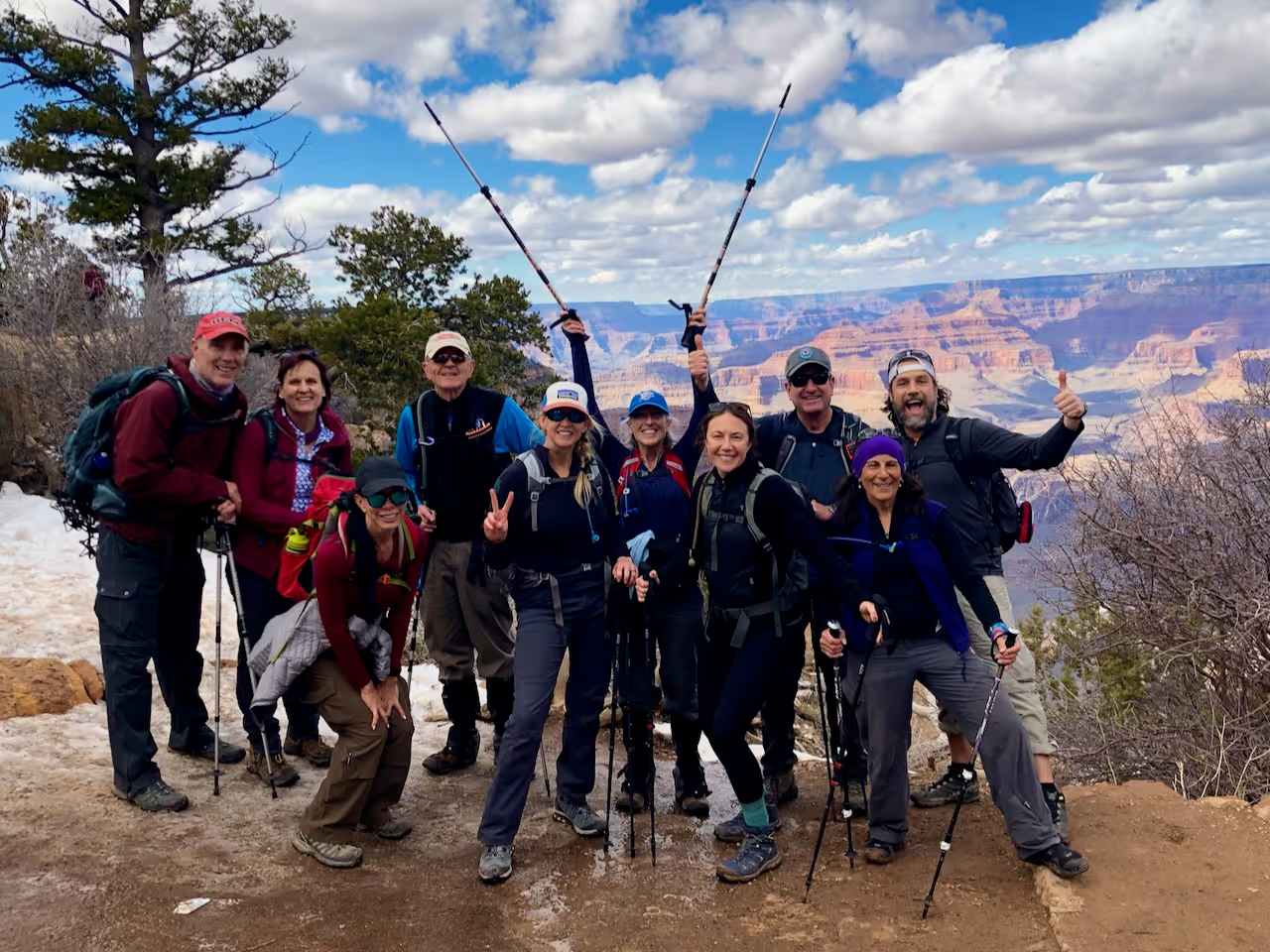
Fast-forward several hiking trips (and two creaky knees) later — my Swiss friend Sebastian and I were on a road trip through the Southwest when he convinced me to use trekking poles on a hike through the Grand Canyon. "They'll save your knees, bro…" Fair enough. I need my knees.
I tried them. I loved them. More importantly, my knees loved them, and my affinity for trekking poles continues to this day. (The fact that we hiked out of the Grand Canyon in a blizzard that day miiiiight have played a role as well...)
If you're joining us on our Inca Trail to Machu Picchu 2026 trek — learn from my mistake. Bring the poles.
So what do trekking poles actually do? Here's the honest breakdown — no fluff, no gear-industry hype:
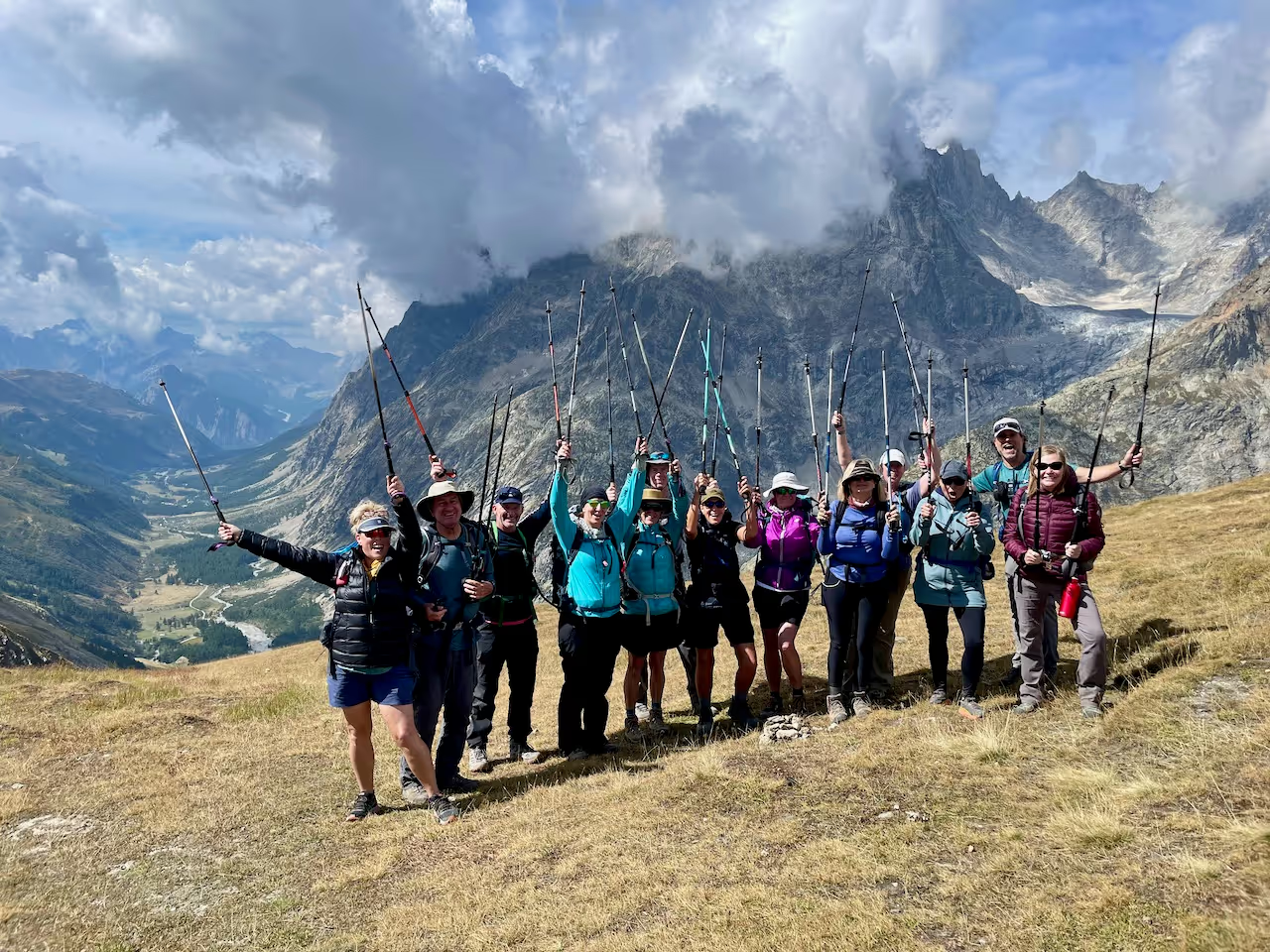
Joint protection. This is the big one. Trekking poles reduce the impact on your knees by transferring force to your arms and shoulders. On long descents — think hiking down from the South Rim into the Grand Canyon or descending alpine passes on the Tour du Mont Blanc — that shock absorption adds up. Less impact per step × thousands of steps = knees that still work at the bottom.
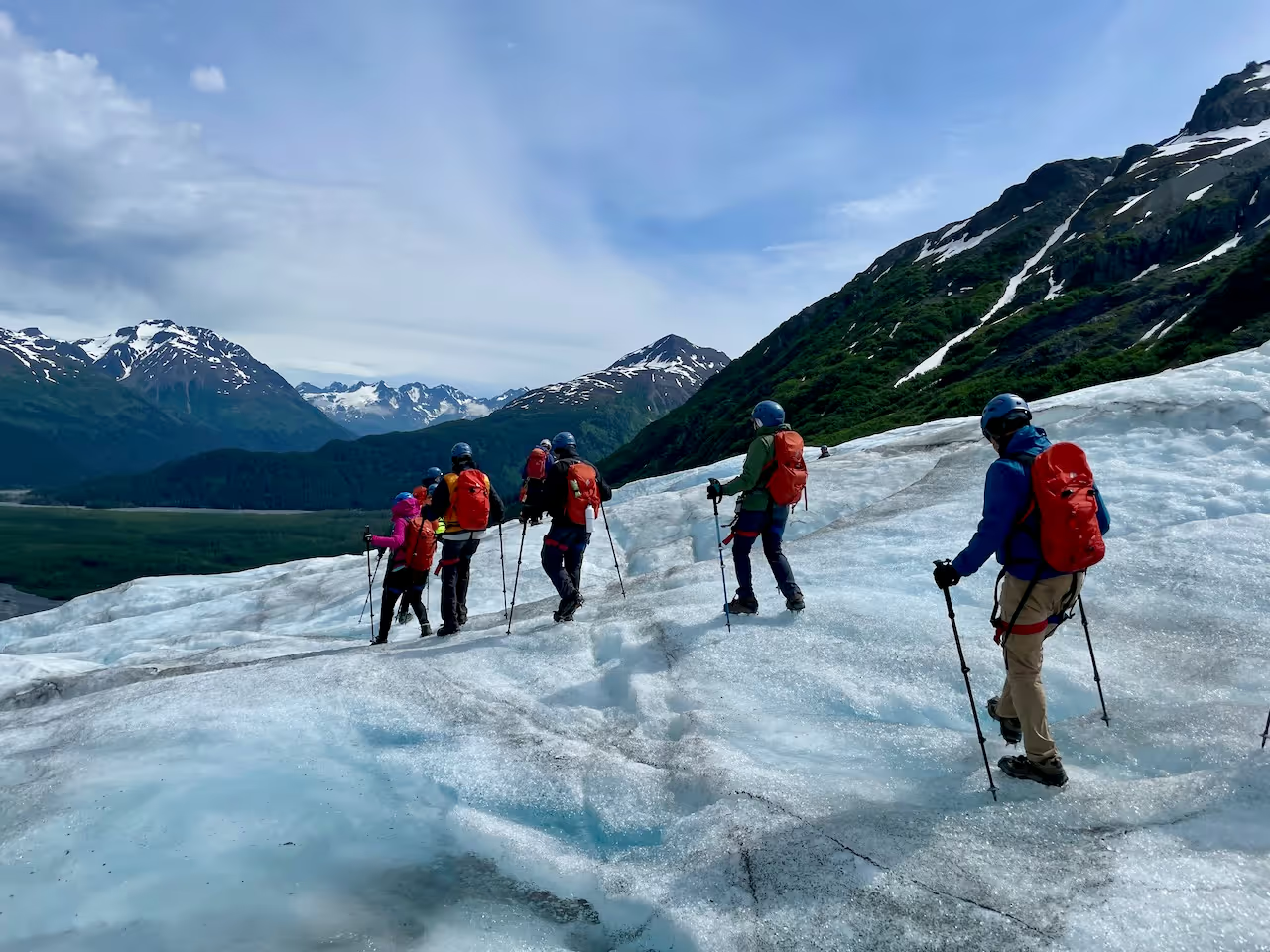
Balance and stability. Four points of contact beat two. This matters on loose rock, wet roots, stream crossings, and anywhere the trail gets technical. On our Iceland adventures, where terrain shifts from volcanic rock to glacial ice to river fords, poles are borderline essential.
Weight distribution. If you're carrying a daypack (or a bigger pack on multi-day treks), poles help redistribute that load from your legs to your upper body. Your arms, shoulders, and core all get recruited into the effort. This means less fatigue, better posture, and more gas in the tank for the second half of a long day.
Endurance on long distances. Even the slightest easing of ligament irritation and repetitive impacts over long distances can make (or break) a hike. As far as our trips are concerned — the Tour du Mont Blanc, our Grand Canyon treks, the hikes we do in Patagonia and Alaska — using trekking poles makes all of these hikes that little bit easier, which in turn makes them that little bit more enjoyable.
Bonus uses. Poles can double as tent-pole supports for ultralight shelters, tripod replacements for photographers (some poles have camera adapters on top), and even backcountry splints in an emergency. Versatile little things.
Not every hike demands trekking poles. Here's when they earn their keep — and when you can leave them behind:
Use poles when:
Skip poles when:
Let's be real: "need" is a strong word. You don't need trekking poles to complete most hikes. People have been hiking without them since forever.
But here's the more useful question: will trekking poles make your hike significantly more comfortable, safer, and more enjoyable?
If your hike involves any of the following, the answer is yes:
For our trips specifically? We list trekking poles on the gear list for the Tour du Mont Blanc, Grand Canyon, Patagonia, Alaska, Switzerland, Peru, and Iceland. That's... basically all the hiking trips. Because they make that much of a difference.
One pole or two? Most hikers use a pair. A single pole (sometimes called a hiking staff) works if you just want a little extra balance, but two poles give you symmetrical support and better weight distribution. For anything with significant elevation change, go with two.
Here's what actually matters when buying trekking poles — and what you can safely ignore:
Grips — Three types: rubber, cork, and foam. Rubber is cheapest, sturdy, and shock-absorbing, but can chafe and cause blisters on sweaty hikes. Cork is softer and molds to your hand over time, though it breaks down eventually. Foam has the most comfortable feel, absorbs sweat, and lasts the longest — typical of higher-end poles.
Pole material — Shafts are either aluminum or carbon/composite. Aluminum is heavier but more durable (bends under stress instead of breaking). Carbon is lighter but can shatter on hard impact. Carbon poles cost more due to the weight savings. For most guided adventure travel, either works fine.
Adjustable vs. fixed-length — You want your arm at a 90-degree angle when gripping the handle on flat ground. Adjustable poles let you lengthen for descents and shorten for climbs, maximizing their utility. The trade-off: locking mechanisms can loosen over time. Fixed-length poles often have extended grips that let you choke down for short climbs without adjusting.
Packability — TSA requires trekking poles in checked baggage (no carry-on). If you fly to your hikes — and if you're joining us on a Fit 4 Adventure trip, you probably are — collapsible or folding poles are worth considering. They pack smaller and fit inside a duffel or checked bag without drama.
Locking mechanisms — Flip-lock (external lever) or twist-lock. Flip-locks are generally more reliable and easier to adjust with cold/gloved hands. Twist-locks are sleeker but can slip.
Tips — Chiseled carbide tips are the best all-around option — good traction on rock, dirt, and ice. Rubber tip covers protect your luggage, reduce noise on pavement, and provide better grip on hard-packed surfaces. Bring both.
Baskets — The round discs near the bottom prevent poles from sinking. Standard small baskets work for most trail conditions. Swap to large snow baskets for winter hiking or snowshoeing.
Shock absorbers — Built-in anti-shock systems cushion each plant. Nice to have on long descents, but not essential. They add a bit of weight and cost.
What pole should you use? Any pole is better than no pole. Functionally speaking, they all do the exact same thing. Sure, you can spend hundreds on top-of-the-line poles, but unless you're an elite mountaineer or an "every-ounce-counts" flashpacker, a pole is a pole. Find one that fits your budget (and fits in your luggage) and you'll be set for whatever the trail throws your way.
A few things we've learned from thousands of miles with trekking poles:
What is a trekking pole?
A trekking pole is a lightweight, handheld pole (usually aluminum or carbon fiber) designed to provide stability, balance, and joint relief while hiking. They distribute the impact of walking across four points of contact instead of two, reducing strain on your knees, hips, and ankles.
Do I need trekking poles for hiking?
For short, flat day hikes on groomed trails, they're optional. For anything involving significant elevation change, uneven terrain, stream crossings, long distances, or a heavy pack, poles make a noticeable difference. If your hike involves more than 1,000 feet of elevation gain or covers more than 5 miles, we strongly recommend them.
What is the difference between a trekking pole and a hiking stick?
Functionally, nothing. They're the same piece of gear. The only "hiking stick" that's truly different is the one you found on the trail — and that's just a stick.
When should I use trekking poles?
On steep descents, extended climbs, uneven/rocky terrain, stream crossings, icy or wet trails, and any hike where you're carrying a heavy pack. They're especially valuable on multi-day treks where fatigue compounds over time.
What are trekking poles for?
Four main things: reducing joint impact on descents, improving balance and stability, distributing pack weight across your upper body, and increasing endurance on long-distance hikes. They also work as tent supports, tripod alternatives, and emergency splints.
Can I bring trekking poles on a plane?
They must go in checked baggage — TSA does not allow them in carry-on. Collapsible or folding poles pack down small enough to fit inside a checked bag or duffel.
How do I size trekking poles?
Stand on flat ground and grip the pole handle. Your elbow should be at a 90-degree angle. Most adjustable poles cover heights from about 5'0" to 6'4". Lengthen by ~5cm for descents, shorten by ~5cm for climbs.
How much should I spend on trekking poles?
Any pole is better than no pole. Budget ($25–$50) works for casual hikers. Mid-range ($75–$120) is the sweet spot for most people. High-end ($150+) makes sense for thru-hikers counting every ounce. For guided adventure travel, mid-range adjustable poles are the best value.
Trekking poles earn their keep on serious terrain — and we do serious terrain. Here are a few trips where you'll be glad you packed them:
Now c'mon — grab your trekking poles (or your hiking sticks) and LET'S GO SOMEWHERE!!!

.avif)